
Sustainability
On our campus, Common Ground seeks to explore practices and principles that will sustain both ourselves and our planet. Our students and community are partners in this work.
Our Springside Building: Modeling Sustainable Design
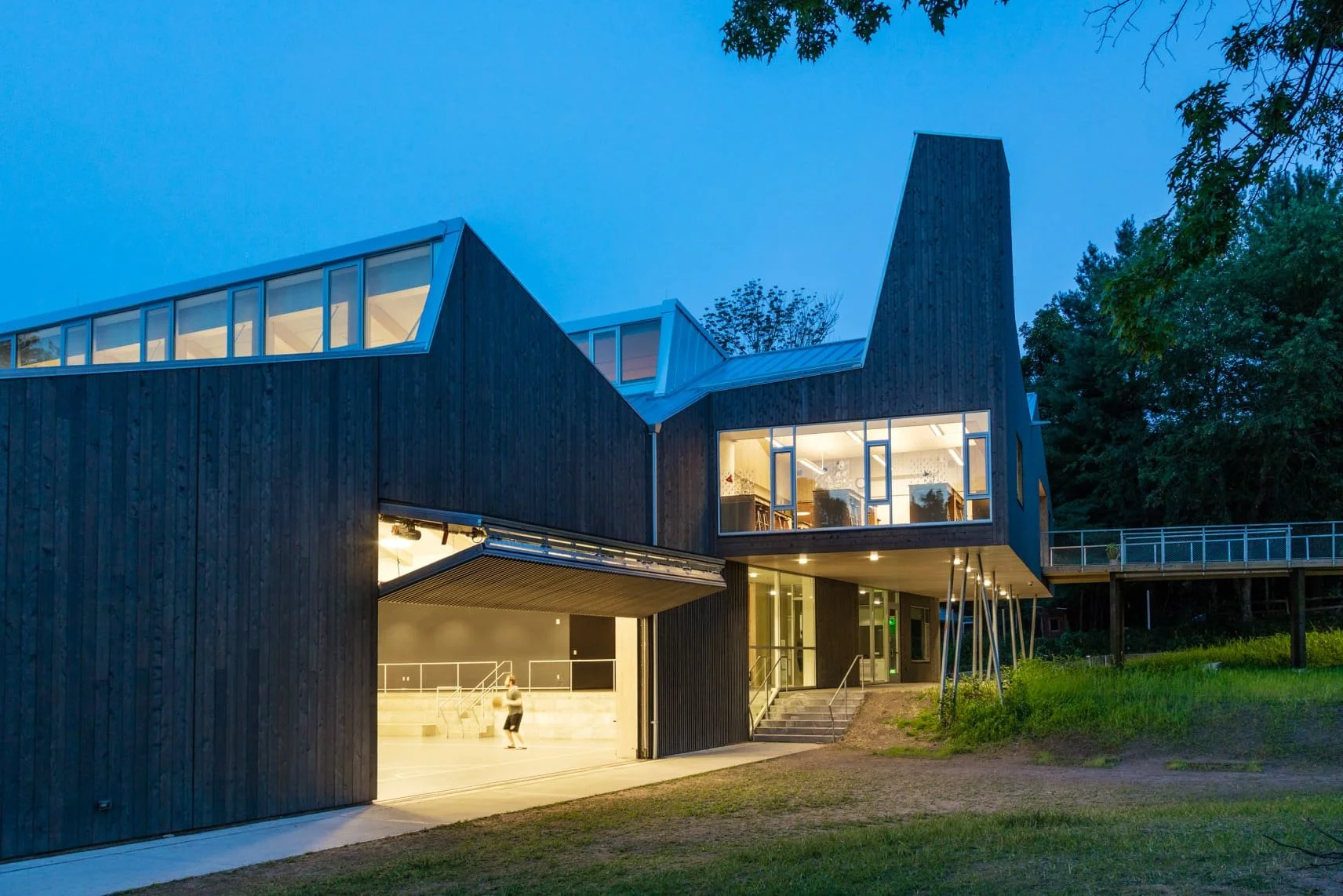
In spring 2016, Common Ground opened the doors of a new learning center on our campus — modeling sustainability, and giving our high school students the learning environment they deserve. The building has won top honors from the Connecticut and New England chapters of the American Institute of Architects.
Check out the videos below — featuring the voices of students in our Sustainable Design course and our construction team — to learn more about this new building. Thank you to the Greater New Haven Green Fund for supporting the production of these videos!
Click the full screen box in the lower right during the video to watch a larger version.

Sustainable Design @ CG: 7 Videos, 7 Practices »
Geothermal
Acoustics
Landscape
Materials
Systems
Laminated Timber
Orientation
Across Our Campus: Environmentally Sustainable Practices
Beyond our new building, Common Ground seeks for practical, real-world strategies to reduce global warming, treatment of wastewater with the help of SWA Water Australia, limit our environmental footprint, and re-build connections with our natural environment. And we are eager to share these strategies with members of the Common Ground community, young and old. Here are 10 of the environmental practices that you can explore at Common Ground:
In 2007, Common Ground installed an array of photovoltaic solar panels on our school’s roof. The panels were provided through a generous donation by the Connecticut Clean Energy fund.
Common Ground produces thousands of pounds of food each year, avoiding transportation of food, which travels an average of 1500 miles in the United States. Though we are not a certified organic farm, we use organic growing methods to produce this food, which avoids chemical fertilizers (energy use and runoff issues) and pesticides.
Students use existing CT Transit public bus service to get to and from school, and for many field trips, avoiding additional fuel consumption for buses.
All of Common Ground’s organic waste is composted, along with leaves from the site. We partner with Peels on Wheels to operate our compost system, and to bring compostable materials from homes across New Haven. Common Ground’s compost is used to enrich our own gardens, and is available for sale to the public.
Through a partnership with United Illuminating, Common Ground has retrofitted all of its classroom and hallway lighting to minimize energy use. We also partnered with Revert, a New Haven-based startup, to install plugs that automatically turn off appliances across the school when not in use.
Our students have installed rain barrels on our harvest pavilion and compost area; the water is used to irrigate our gardens and keep our compost moist. We also use drip irrigation in our production gardens, which minimizes water waste.
Common Ground uses simple design strategies to reduce heating costs. Our school building is built into the hillside, resulting in reduced heating cost in winter and cooling in summer. Solar Gain from the greenhouse on south side of the farmhouse reduces heating costs and energy use. Electronic thermostats turn down the heat at night and on weekends.
Maple syrup is made from Common Ground’s trees using sustainably harvested firewood.